













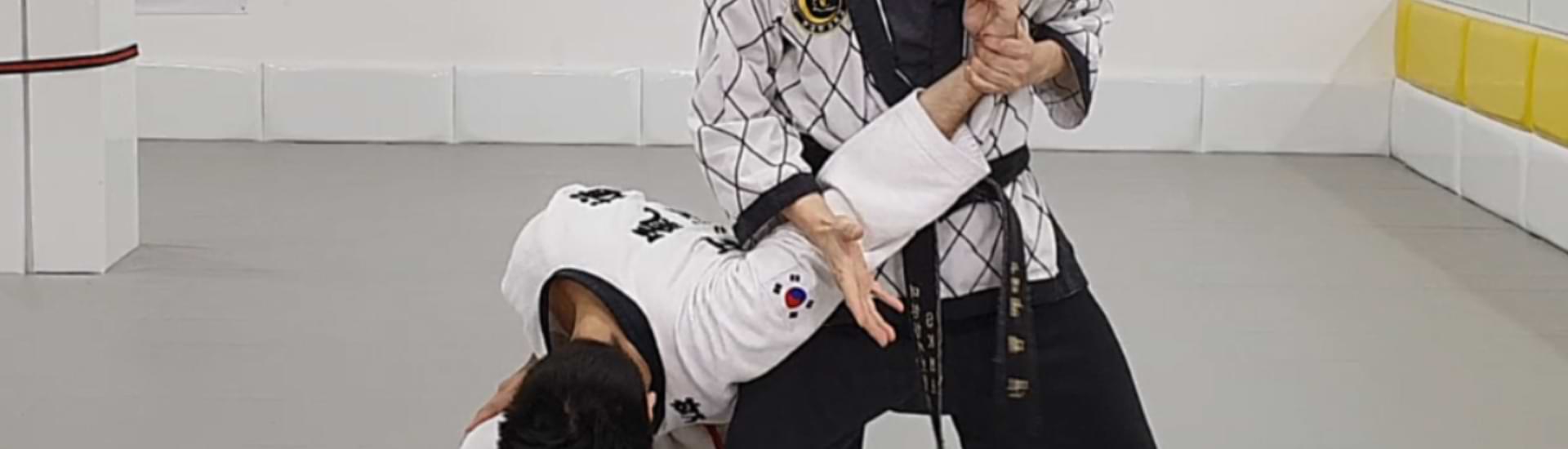
WHITE BELT
SELF DEFENCE
White Belt
'A black belt is simply a white belt that did not give up.'
This entry-level course introduces you to Master Sung and the foundational knowledge you will need to become capable of confident self-defence no matter your size. A White Belt certification leads to a Yellow Belt, a Yellow Belt certification to a Senior Yellow Belt, and so on. Once you have purchased the course, the videos will be available under your user name in the top right of the screen whenever you log on, so you can practice as much as you like with lifetime membership and access.
White Belt Starter Course
Price £ 59.99
The White Belt Course brought to you by Master Sung 7th Dan Hapkido includes all the knowledge you need to prepare for certification to the next level. With easy-to-follow and clear instructions from Master Sung and multi-angled videos and close-ups, the fundamentals of Hapkido and the basics of self-defence are simplified. This complete course includes the cost of video certification by Master Sung, including the reward of a yellow belt for successful students. Only individuals who have completed all the sections in the course are eligible for the certification exam. You can, however, purchase one on one, video or in-person classes with Master Sung at his school, at home or online, and you can also buy any equipment that you may need from our online shop.
Introduction
Basic Etiquette
Hapkido is all about self defence but also about respect for yourself and others, so it is good to understand some basic etiquette before starting. In each course, we start with a short video to ensure all students have a standard way of behaving should they ever find themselves training with fellow students at our London-based dojang.
Uniform and Belt
To practice Hapkido properly, you need a uniform and a belt. You also need to know how to use them. In this video, Master Sung will show you how to present yourself correctly. Even if you are studying at home, it is important that you do so to pass your test. We can supply uniforms, or you can buy locally as you wish, but not having one or not wearing one during training isn't an option.
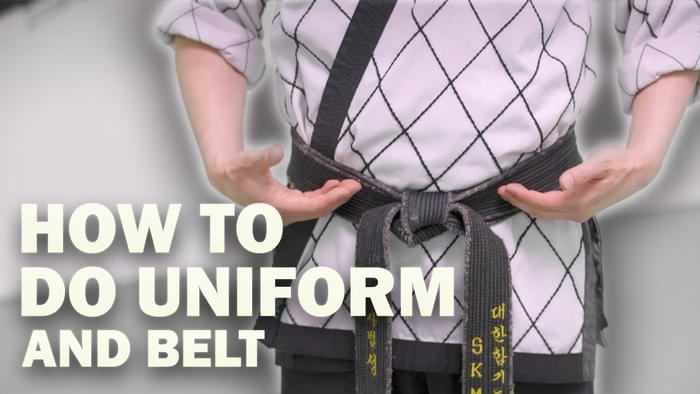
Uniform and Belt
To practice Hapkido properly, you need a uniform and a belt. You also need to know how to use them. In this video, Master Sung will show you how to present yourself correctly. Even if you are studying at home, it is important that you do so to pass your test. We can supply uniforms, or you can buy locally as you wish, but not having one or not wearing one during training isn't an option.
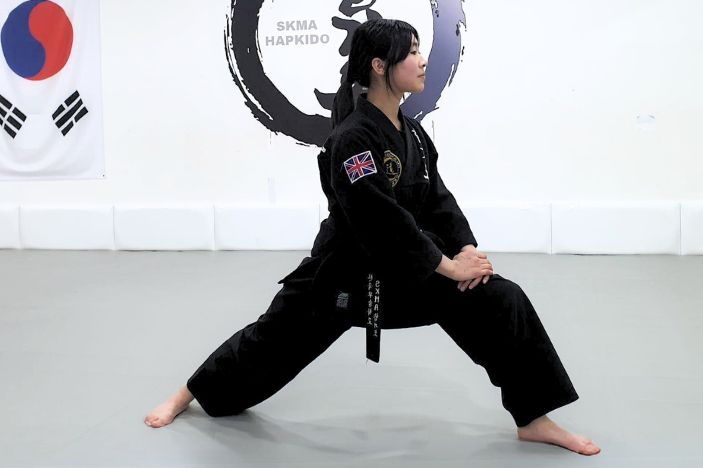
Warm Up
Warming up before Hapkido or any other sports activity is obligatory. It prevents injuries, improves performance, increases range of motion and flexibility and prepares you mentally for training. It also increases blood flow, raises body temperature, and loosens joints, reduces the risk of injuries. It optimises muscle performance, reaction time, and coordination. It helps mentally transition into training, improves concentration, and increases alertness. It enhances flexibility for techniques and reduces stress and anxiety. It is the first and the most important part of the training.
White Belt Self-Defence Techniques
Pre-emptive Attack
Belt and Chin
Hapkido is mainly about defence, but sometimes the best form of defence is to attack. In this video, Master Sung introduces the basic belt and chin defensive attack and explains in which situations to use it. This is the start of finding your confidence and the beginning of your journey to competent self-defence in all situations.

Knife Attack
We call this a knife attack not because there is a knife but because we are using the sharp part of our forearm on the correct pressure point above the elbow in order to pacify the opponent. This defensive technique can be used when somebody grabs you by the arm. No matter how big they are or how small you are you will take control if you apply this technique correctly.
Cradle
The cradle gets its name from the fact that when done well the arms look like you are cradling a baby. In the Hapkido White belt course you need to know the same side technique. When you move to Hapkido Yellow belt you will learn how to apply this technique cross arm. The key to this self defence technique is the rotate the opponent's arm and kept space from your own chest.
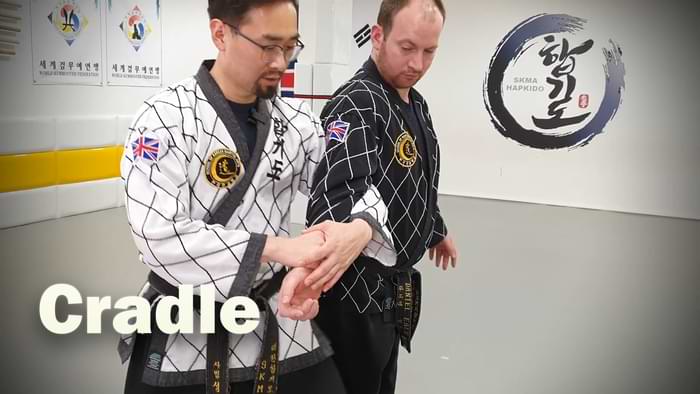
Cradle
The cradle gets its name from the fact that when done well the arms look like you are cradling a baby. In the Hapkido White belt course you need to know the same side technique. When you move to Hapkido Yellow belt you will learn how to apply this technique cross arm. The key to this self defence technique is the rotate the opponent's arm and kept space from your own chest.

Wrist Lock
Many Martial Arts include a wrist lock technique, but students often do not apply it correctly. In Hapkido, we use a rolling wrist lock, and this video demonstrated, in close-up, exactly how to practice this technique to control your opponent. We can see that Donna, our white belt student, can control a much bigger and stronger opponent and performs this technique correctly.
Playstation 1
This technique is named Playstation 1 because the student can easily remember what the grip of their hold should be. It is exactly the same as holding a Playstation controller with the index fingers up to allow greater wrist rotation. Close-up views in this video show you exactly how to perform this white belt technique that is the basis of more advanced self-defence methods learnt at higher belts.
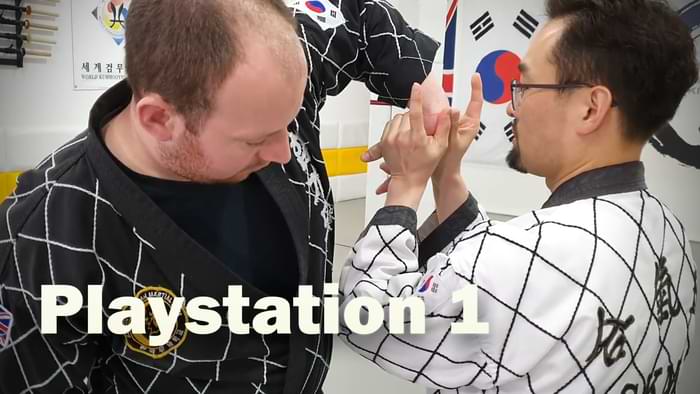
Playstation 1
This technique is named Playstation 1 because the student can easily remember what the grip of their hold should be. It is exactly the same as holding a Playstation controller with the index fingers up to allow greater wrist rotation. Close-up views in this video show you exactly how to perform this white belt technique that is the basis of more advanced self-defence methods learnt at higher belts.
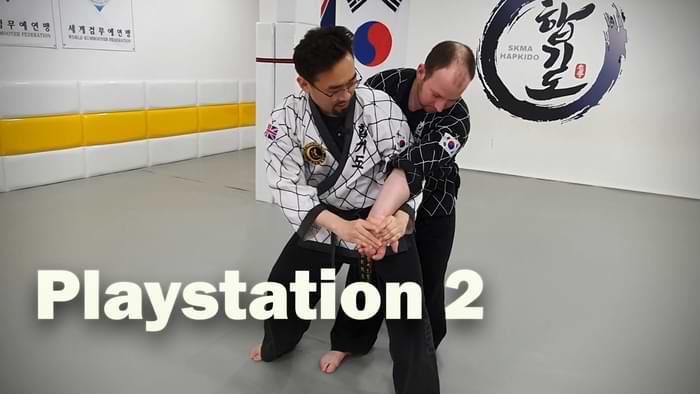
Playstation 2
Similarly named for the same reasons as the last technique, Playstation 2 is a more developed self defence technique that will allow you to put your opponent on the floor and control them. It is important not to lift the arm too far and to step correctly to achieve this powerful Hapkido move. This move is used when someone is holding the same side wrist or as part of a robust punching defence.
Pre-emptive Attack Revision
In this video, we review the pre-emptive attacks to ensure you know exactly what is expected from a White belt student in the examination. There are no higher-level applications or extensions for the higher belts, just the basic techniques you will need to know to gain your yellow belt successfully. This video should be studied frequently and can form a solid part of your daily Hapkido regime.
Pre-emptive Attack Revision
In this video, we review the pre-emptive attacks to ensure you know exactly what is expected from a White belt student in the examination. There are no higher-level applications or extensions for the higher belts, just the basic techniques you will need to know to gain your yellow belt successfully. This video should be studied frequently and can form a solid part of your daily Hapkido regime.
Same Side Wrist
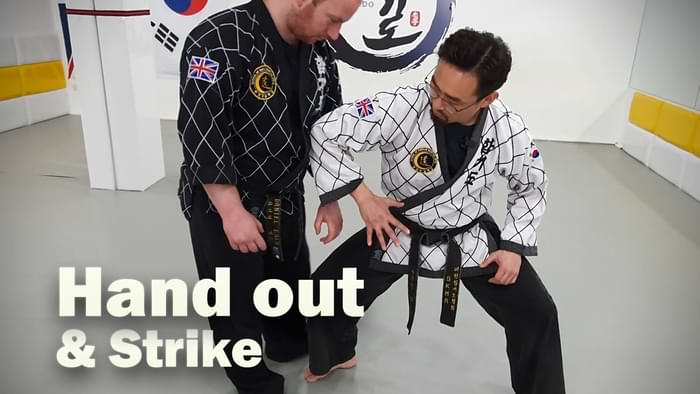
Hand Out and Strike
When someone grabs you by the wrist, you have no real idea what their intention might be. The best response is to remove your hand from their grasp and, if necessary, strike back. In this video, you will learn the best way to do this and a technique that is very often the first move in defending yourself from any attacker.
Knife and Cradle
In this video, we start to focus on the combination of taking hands out and other pre-emptive attack techniques at the white belt level. Even at the white belt level, we are now learning powerful techniques that effectively control any opponent when combined correctly. But at this stage in the course, you should be gaining confidence and beginning to understand what learning Hapkido can give you.
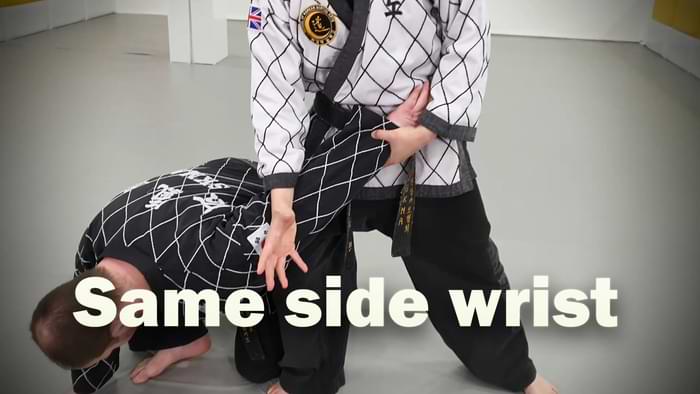
Knife and Cradle
In this video, we start to focus on the combination of taking hands out and other pre-emptive attack techniques at the white belt level. Even at the white belt level, we are now learning powerful techniques that effectively control any opponent when combined correctly. But at this stage in the course, you should be gaining confidence and beginning to understand what learning Hapkido can give you.
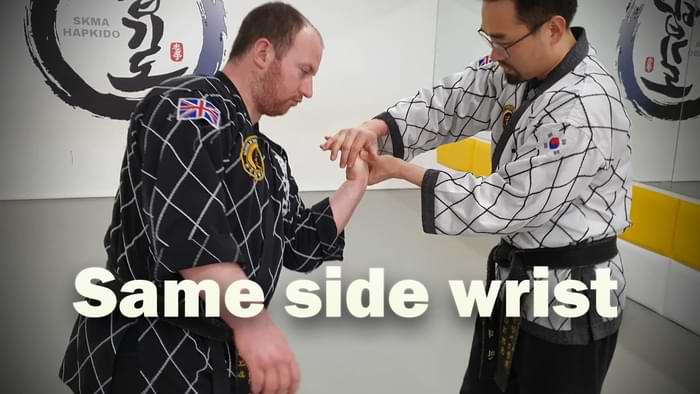
PlayStation 1, PlayStation 2 and Wrist Lock
In this video, we continue to develop combination techniques, with the take hands-out technique being combined with the remainder of the pre-emptive attacks we learned previously. We can already see how Hapkido's skill can be built up to become extremely effective for self-defence and controlling any attacker quickly and completely.
Hapkido Kicks
Single Kicks
Stretching Kicks
At the start of any session of kicks, you need to warm up to avoid injury. Here we present three types of kicks that can be used to stretch the body and extend your knowledge: Heel raising kick, Inside kick and Outside Kick. The idea is to start small and practice a lot, gaining height and flexibility until you can comfortably kick to face height. It will take time and effort, but it is good for your well-being and confidence when you succeed.
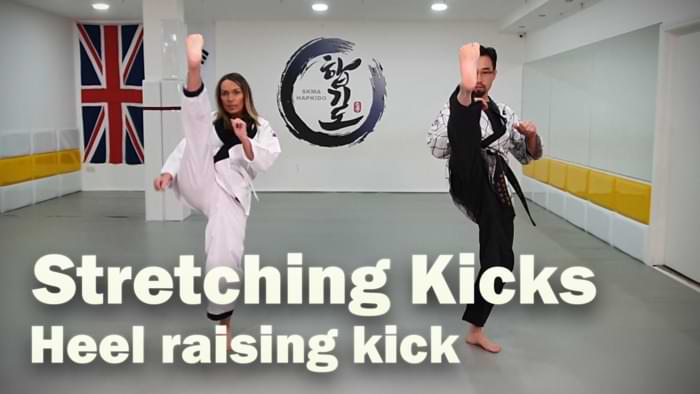
Stretching Kicks
At the start of any session of kicks, you need to warm up to avoid injury. Here we present three types of kicks that can be used to stretch the body and extend your knowledge: Heel raising kick, Inside kick and Outside Kick. The idea is to start small and practice a lot, gaining height and flexibility until you can comfortably kick to face height. It will take time and effort, but it is good for your well-being and confidence when you succeed.
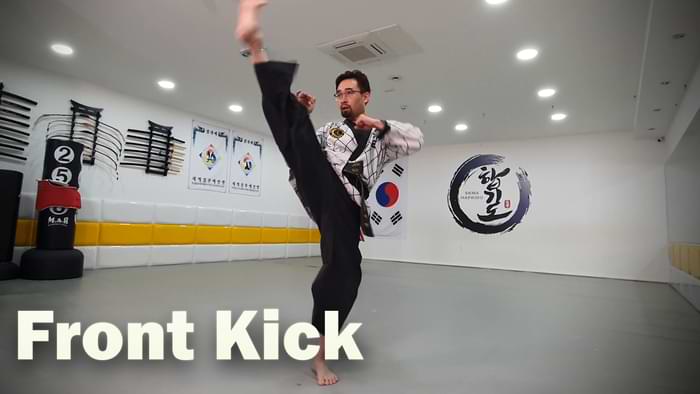
Front Kick
Kicking is an important skill in Hapkido, and there are several different techniques to master. In this video, we introduce kicking using the front kick. This kick is very useful in many situations and easy to learn, but it takes much practice to master. Accessories to help learn kicking are available from our online shop.
Turning Kick
The turning kick is an extremely useful and practical self defence technique in many real-world situations. It is a complicated kick with several important stages that must be combined effectively. This video walks you slowly through the stages of the kick, starting with support and helping to improve your balance as you train.
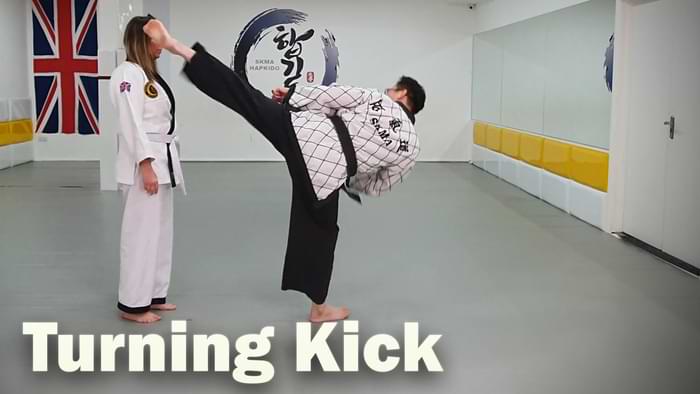
Turning Kick
The turning kick is an extremely useful and practical self defence technique in many real-world situations. It is a complicated kick with several important stages that must be combined effectively. This video walks you slowly through the stages of the kick, starting with support and helping to improve your balance as you train.

Side and Back Kick
In this video, we introduce two more important weapons in the basket of kicking techniques you will have available to you for self defence when you complete this course. In this video, we will show in close detail how to perform these two techniques correctly to generate power and make distance from your attacker.
Hook and Reverse Kick
In this video, we introduce two slightly more difficult techniques: hook kick and reverse hook kick. It is normal for beginners to have some problems with the hook kick and reverse hook kick, so focusing more practice time on these techniques is highly recommended. The hook kick is a very effective self defence technique, but you must invest fully to benefit from training.
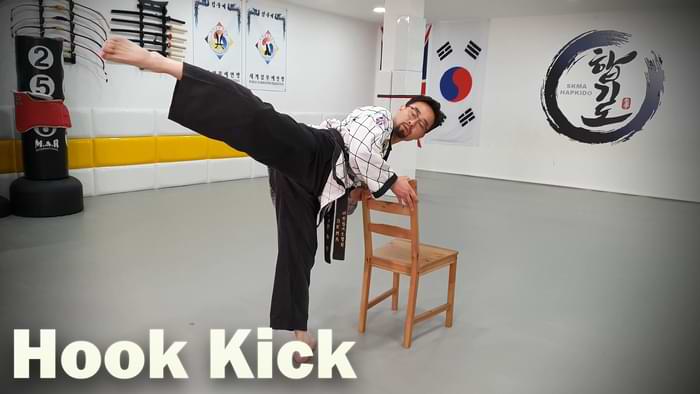
Hook and Reverse Kick
In this video, we introduce two slightly more difficult techniques: hook kick and reverse hook kick. It is normal for beginners to have some problems with the hook kick and reverse hook kick, so focusing more practice time on these techniques is highly recommended. The hook kick is a very effective self defence technique, but you must invest fully to benefit from training.
Hapkido Kicks Revision
This video has compiled all the kicks necessary for your examination, providing you with a comprehensive review. It is important to note that these revision videos should be watched after completing the section details. Watching them only after completing the previous kicks lessons may cause you to overlook important finer details and close-ups essential for correctly understanding the techniques. Additionally, this video can be incorporated into your regular cardio exercise routine. Following along and practising the kicks can improve your cardiovascular fitness while honing your martial arts skills. Remember to approach these revision videos with a focused mindset and attention to detail, as they are designed to enhance your understanding and proficiency. Use this resource effectively to maximise the benefits of your training and examination preparation.
Breakfalls
Front Breakfall
When we fall over in normal life, we can often hurt ourselves, and of course, when fighting, the chances of hurting ourselves are much greater. The front fall technique will protect your hands, wrists and face when you fall. In this video, we will show you how to slowly and safely develop your break-fall technique so that, after some practice, you become confident that you will not harm yourself.
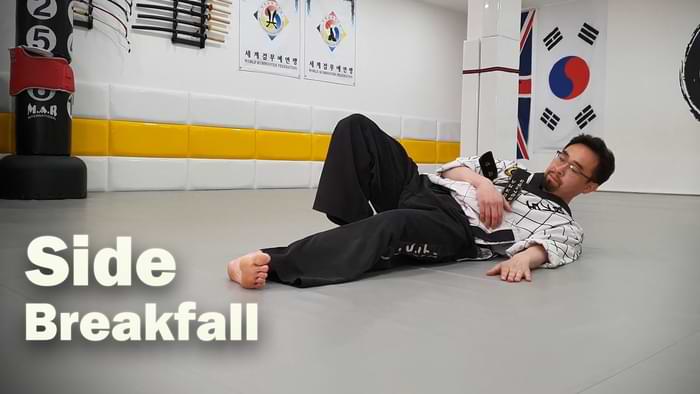
Side and Back Breakfall
Moving on from the front break fall in this video, we extend your options so you can fall in any direction without getting hurt. Whilst break falls are not the most exciting technique, they are extremely important in self-defence. When practising at home, you should take great care to follow the developments suggested and not attempt to overdo the full technique.
Rolling Forward Breakfall
Perhaps the most effective Break Fall is the rolling break fall. In this video we show you a step by step guide in order to practice this technique safely and to gain confidence in rolling. Master Sung shows how the the same technique in higher belts can be improved to allow you to stand up again after being thrown then demonstrate the simpler version at this level
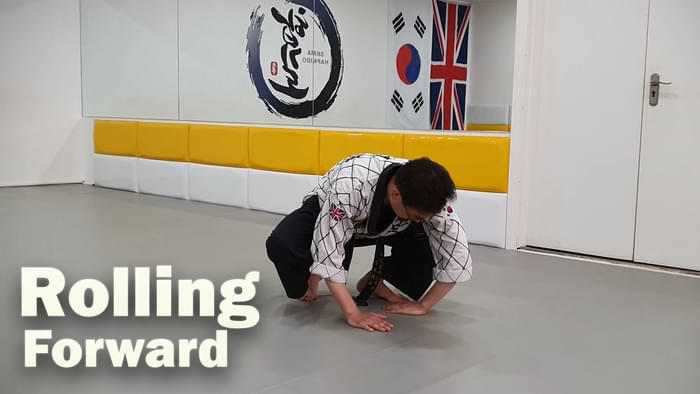
Rolling Forward Breakfall
Perhaps the most effective Break Fall is the rolling break fall. In this video we show you a step by step guide in order to practice this technique safely and to gain confidence in rolling. Master Sung shows how the the same technique in higher belts can be improved to allow you to stand up again after being thrown then demonstrate the simpler version at this level
Exam Preparation
White Belt Exam Preparation
This last video in the White Belt course is a revision and preparation for the video examination you will submit. Combining everything we have learnt into a short video that Master Sung will review to ensure you have made the necessary progress to safely move to a Yellow belt course and continue improving your confidence through Hapkido-based self-defence. You've made it so far, and you only have a little way to go. We wish you all the best on your exam. You've got this!