













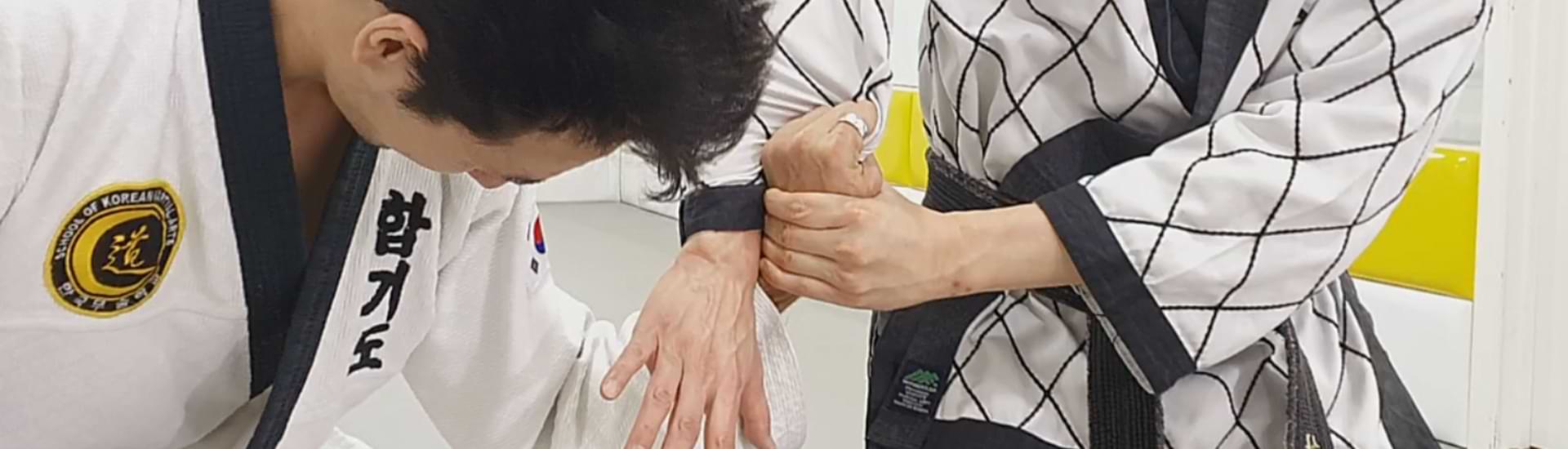
YELLOW BELT
SELF DEFENCE
Yellow Belt
'A black belt is simply a yellow belt that did not give up.'
When you are involved in a fight you did not pick and cannot avoid, it is difficult to understand that your actions must be seen as self-defence. Hapkido is taught as a method of self defence rather than as a primary attack. It is the perfect way to ensure effective self-defence cannot be confused with aggressive behaviours.
The best way to defend is to harmonise your own and your opponent's energy and turn both to your advantage. In the Yellow Belt course, you will learn several different techniques to pacify and free yourself from the opponent when attacked from the front. You will also begin to learn not to work against the opponent's energy and how to utilise it to deliver favourable self defence outcomes. You can think about this in the same way as you might if you were fighting with a 5-year-old child. You need to exercise control effectively without harming the child. Of course, this is very difficult when the opponent is stronger and much more aggressive than you. However, after learning effective techniques, the desired result can be achieved through disciplined training and practice.
Yellow Belt Course
Price £ 59.99
The Yellow Belt Course is once again brought to you by Master Sung 7th Dan Hapkido, and it includes all the knowledge you need to prepare for certification to senior yellow belt. Like all our courses, there are easy-to-follow and clear instructions from Master Sung, multi-angled videos and close-ups of the fundamentals of Hapkido and the basics of self-defence. This is a complete course for Junior Yellow Belt that includes the cost of video certification by Master Sung, including the reward of a senior yellow belt for successful students. Only individuals who have completed all the sections in the course are eligible for the certification exam. You can, however, purchase one on one, video or in-person classes with Master Sung at his school, at home or online, and you can also buy any equipment that you may need from our online shop.
Introduction

Etiquette: Chung Hyo
Our School motto, "Chung Hyo," encompasses the fundamental principles of loyalty and respect. In this context, "Chung" represents loyalty, while "Hyo" symbolizes respect. When we bow to one another, we uphold and acknowledge these values by saying "Chung Hyo." In Korean, "Chung Hyo" is written as "충 효." Here are the individual characters: Chung (충) - This character represents loyalty or devotion. Hyo (효) - This character represents respect or filial piety.
Warm Up
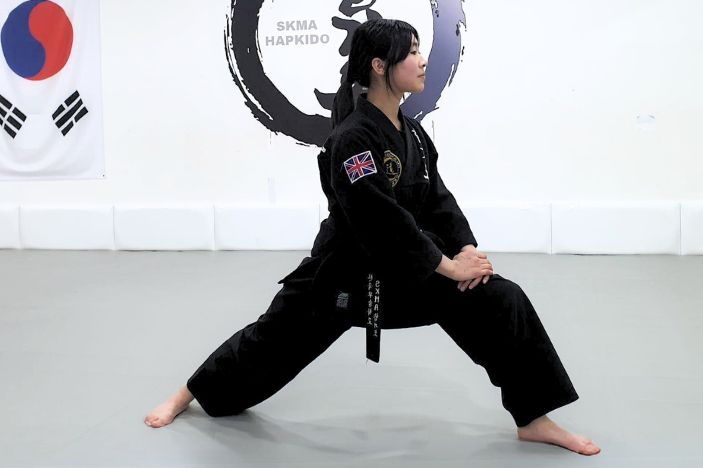
Warming up for Hapkido is as essential in the yellow belt as it is in any other belt. By now you should be familiar with this warm-up and can be confident that it will be the same right up to black belt. Warming up prevents injuries, improves performance, increases range of motion and flexibility and prepares you mentally for training. It also increases blood flow, raises body temperature, and loosens joints, reduces the risk of injuries. It optimises muscle performance, reaction time, and coordination. It helps mentally transition into training, improves concentration, and increases alertness. It enhances flexibility for techniques and reduces stress and anxiety. It is the first and the most important part of the training.
Warm Up
Warming up for Hapkido is as essential in the yellow belt as it is in any other belt. By now you should be familiar with this warm-up and can be confident that it will be the same right up to black belt. Warming up prevents injuries, improves performance, increases range of motion and flexibility and prepares you mentally for training. It also increases blood flow, raises body temperature, and loosens joints, reduces the risk of injuries. It optimises muscle performance, reaction time, and coordination. It helps mentally transition into training, improves concentration, and increases alertness. It enhances flexibility for techniques and reduces stress and anxiety. It is the first and the most important part of the training.
Yellow Belt Self-Defence Techniques
Against Cross Wrist Grab
Knife and Cradle
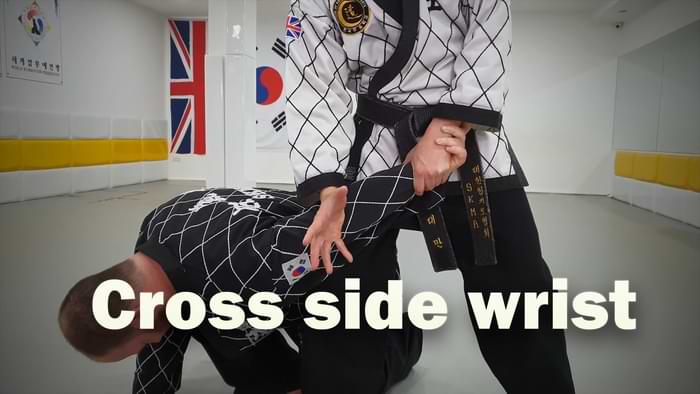
There are many types of attack that we may need to defend against but a large group fall under the heading of grappling, where your opponent tries to grab you by your clothing or hair. In this section of the course, we run through 12 different techniques you can employ to free yourself or pacify your opponent. We start with the Knife and Cradle techniques from the white belt course deployed against a cross-wrist grab.
Wrist Lock and Z lock
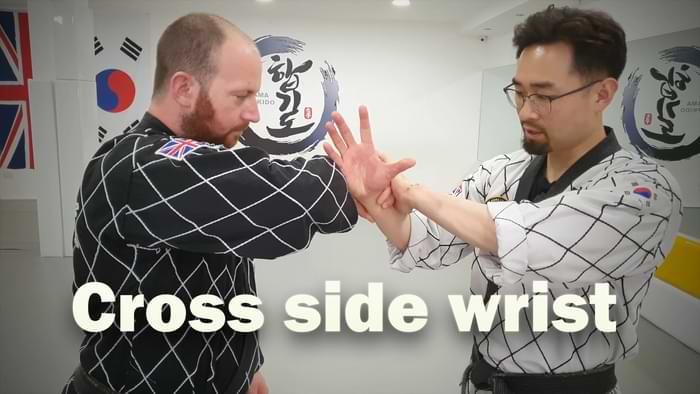
These simple yet powerful techniques can be easily practised at home. The scenario involves an opponent grabbing you with their opposite wrist. Your objective is to utilise their own body against them, effectively freeing yourself and gaining control of the situation. In this instructional video, you will rapidly learn how to execute a wrist lock and a Z lock to neutralise your opponent's grip swiftly. These techniques allow you to disarm the opponent and regain control, granting you the advantage in the encounter.
Wrist Lock and Z lock
These simple yet powerful techniques can be easily practised at home. The scenario involves an opponent grabbing you with their opposite wrist. Your objective is to utilise their own body against them, effectively freeing yourself and gaining control of the situation. In this instructional video, you will rapidly learn how to execute a wrist lock and a Z lock to neutralise your opponent's grip swiftly. These techniques allow you to disarm the opponent and regain control, granting you the advantage in the encounter.

Outside Turn and Sandwich
These two techniques are highly complex and commonly found in advanced hapkido levels. You'll encounter them in various situations. The first technique is known as the Outside turn pressure point. It requires precise knowledge of where to apply pressure on specific points. When executing this technique, you must minimise the space between your body and your opponent. Be cautious not to raise your opponent's arm too high, as it may result in being pulled back and caught in a vulnerable position. The Sandwich technique requires turning your back to your opponent, and it can be dangerous if not executed swiftly, efficiently and precisely.
Sleeve Grab Defence
Lower Sleeve: Tea Cup and Turn Strike
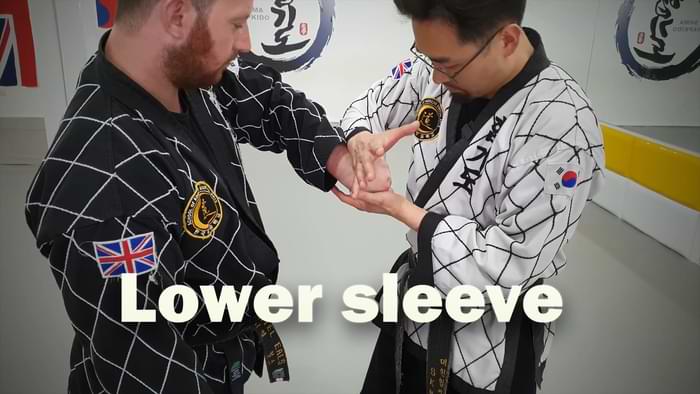
The techniques are called the Tea Cup and Turn Strike. The Tea Cup technique is crucial and focuses on creating a defensive barrier in the shape of a letter Z. When executing this technique; it is important not to lift your arm too high, just over the opponent's hand. To form the desired shape, you must step in deeply and push to maintain proximity. Remember, avoid lifting your arm upwards during the move.
Lower Sleeve: Tea Cup and Turn Strike
The techniques are called the Tea Cup and Turn Strike. The Tea Cup technique is crucial and focuses on creating a defensive barrier in the shape of a letter Z. When executing this technique; it is important not to lift your arm too high, just over the opponent's hand. To form the desired shape, you must step in deeply and push to maintain proximity. Remember, avoid lifting your arm upwards during the move.
Middle Sleeve: Z lock and Wrist Lock
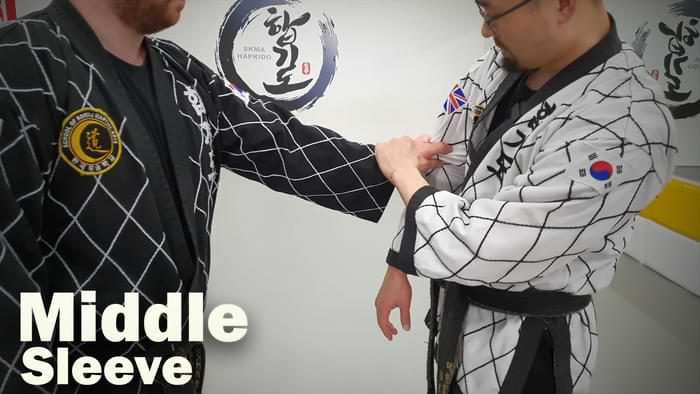
The technique I'm going to explain is known as Middle Sleeve Grab Defense with two different variations: the Z Lock and the Wrist Lock. Both variations are used in similar situations, but the distinction lies in how you grip your opponent's hands with your left hand. It is crucial to pay attention to this difference. In the Z Lock variation, you step forward to make your opponent bend, neutralising their strength. Meanwhile, the wrist lock involves pulling your opponent backwards. For both techniques, you initially step in to neutralise your opponent's strength and then execute the pull-back motion. After pulling back, you step back and bring your opponent down to the ground.
Elbow, Shoulder and Collar Grab Defence
Elbow Lock and Z Lock
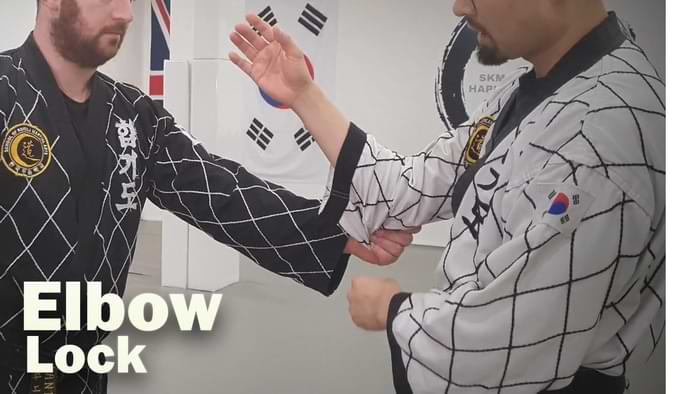
The techniques I will discuss are the Elbow Lock and Z Lock. When someone grabs your shoulder, it is crucial to know these techniques, as they are effective in various situations. In the Elbow Lock technique, the key is to pull your opponent's elbow across your body while simultaneously pushing your hands forward to trap their arm in your armpit. This is a vital aspect of the technique. Remember to remain vigilant in these situations.
Elbow Lock and Z Lock
The techniques I will discuss are the Elbow Lock and Z Lock. When someone grabs your shoulder, it is crucial to know these techniques, as they are effective in various situations. In the Elbow Lock technique, the key is to pull your opponent's elbow across your body while simultaneously pushing your hands forward to trap their arm in your armpit. This is a vital aspect of the technique. Remember to remain vigilant in these situations.
Collar Grab - 3 Techniques
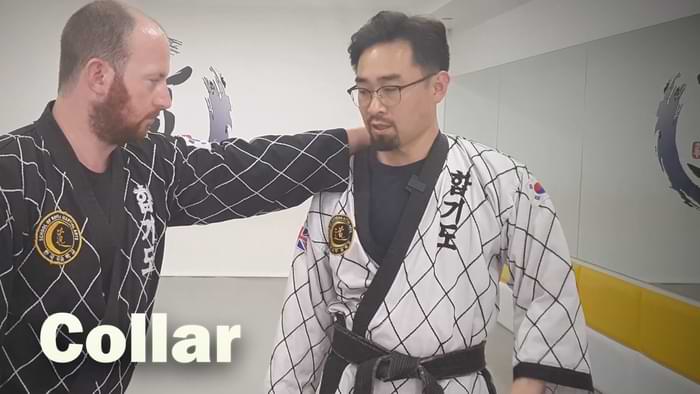
In this section, you will learn three techniques specifically designed to counter opponents who attempt to grab and throw you. These techniques are highly effective in such scenarios. Knife Poking, Elbow Hold and Turn, and Break and Disable are the techniques. Knife Poking, in this technique, you employ a knife-hand strike to your opponent's vulnerable areas. Elbow Hold and Turn, when your opponent grabs your elbow, swiftly turn your body while pulling their arm towards your chest. This technique significantly strains their joints and can potentially lead to a break, rendering their attack ineffective. Break and Disable, this technique focuses on breaking your opponent's balance and disabling their ability to throw you. By leveraging proper body mechanics, you can neutralise their attack effectively.
Chest Grab Defence
Normal Z Lock
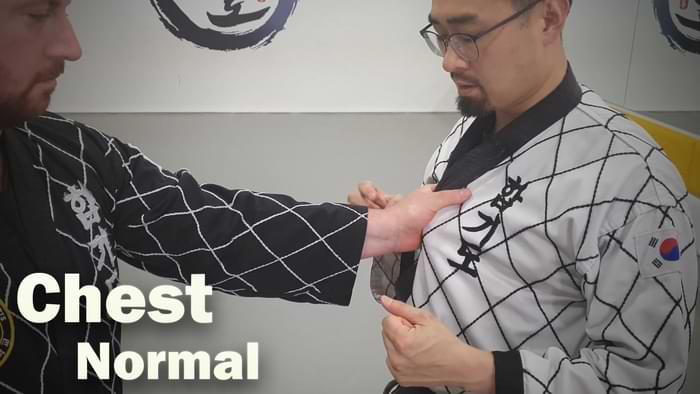
A particularly useful technique in defending against a chest grab is the Normal Z Lock. This technique is highly effective in non-aggressive situations where the assailant is not initially throwing punches. This technique can be invaluable if someone attempts to grab your chest and pose a threat. However, it's important to consider the angle at which your opponent is holding you. The Normal Z Lock technique is applicable when your opponent's thumbs are facing upwards. If their hands are angled differently, such as facing downwards, this specific technique may not be suitable. Remember, the Normal Z Lock technique is specifically designed for defending against chest grabs in situations where physical aggression hasn't escalated to throwing punches.
Normal Z Lock
A particularly useful technique in defending against a chest grab is the Normal Z Lock. This technique is highly effective in non-aggressive situations where the assailant is not initially throwing punches. This technique can be invaluable if someone attempts to grab your chest and pose a threat. However, it's important to consider the angle at which your opponent is holding you. The Normal Z Lock technique is applicable when your opponent's thumbs are facing upwards. If their hands are angled differently, such as facing downwards, this specific technique may not be suitable. Remember, the Normal Z Lock technique is specifically designed for defending against chest grabs in situations where physical aggression hasn't escalated to throwing punches.
Lifting Up - 2 Techniques
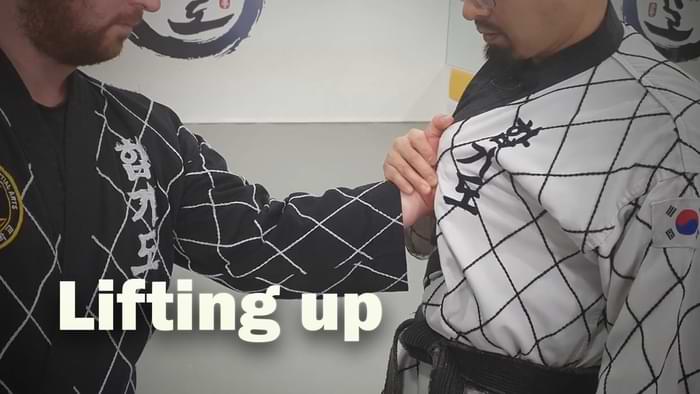
In this demonstration video, we will showcase two techniques specifically designed to defend against someone grabbing your chest and attempting to lift you up. This scenario often occurs when your opponent aims to display their physical strength, typically when they are stronger than you. You can exploit this vulnerability when you observe your opponent's hands tensing up as they lift. The first technique involves using your same-side hand to firmly grab your opponent's wrist. You can easily execute a wrist lock from this position, applying pressure to their joint. Once the wrist lock is established, you have two options for further action, depending on the circumstances. These two techniques offer different approaches to gain control and neutralise your opponent's strength.
Upside Down - 2 Techniques
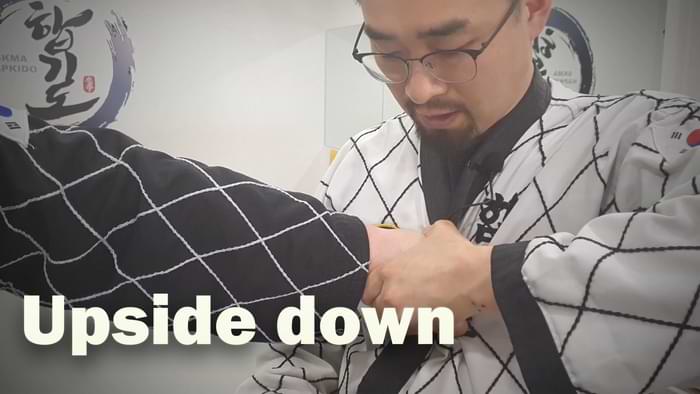
In this video, we will demonstrate two techniques for defending against a chest grab where the opponent is holding you with their hands and thumbs facing down. This particular hand position makes it easier for you to defend yourself. The key aspect to focus on in this demonstration is how you grab your opponent's hands. It is crucial to observe and understand the proper grabbing technique carefully. Once you have a secure grip, you will twist, denying your opponent's control and twisting their hands inward. By employing this technique, you can perform two different defensive techniques, effectively countering your opponent's chest grab in an upside-down hand position.
Upside Down - 2 Techniques
In this video, we will demonstrate two techniques for defending against a chest grab where the opponent is holding you with their hands and thumbs facing down. This particular hand position makes it easier for you to defend yourself. The key aspect to focus on in this demonstration is how you grab your opponent's hands. It is crucial to observe and understand the proper grabbing technique carefully. Once you have a secure grip, you will twist, denying your opponent's control and twisting their hands inward. By employing this technique, you can perform two different defensive techniques, effectively countering your opponent's chest grab in an upside-down hand position.
Hair and Belt Grab Defence
Hair - 2 Techniques
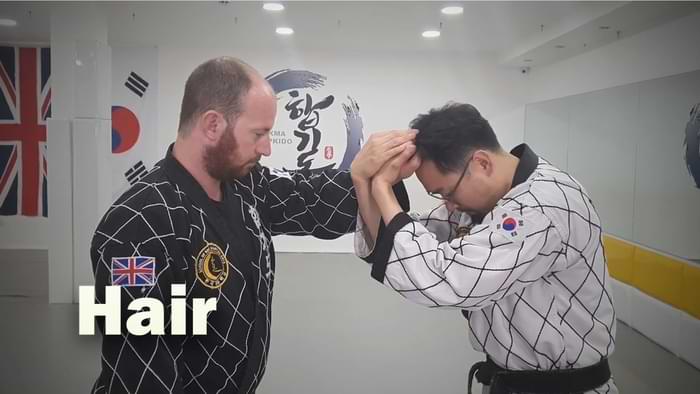
In this video, Master Sung will demonstrate two effective techniques to defend against a hair grab. This common situation can occur during confrontations between individuals, particularly among women. It's natural to panic when someone grabs your hair, but you can effectively respond by analysing how they hold it. The first technique involves holding your opponent's hands firmly against your head. From this position, you have two options. The first option is to move forward with your body in a straight line. The second option is to execute a Z Lock manoeuvre, where one of your arms goes over your opponent's arm. This technique allows you to apply a lock and gain control over the situation. By learning and practising these two techniques, you can effectively defend yourself when faced with a hair grab, empowering you to stay calm and assertive in such confrontations.
Belt - 2 Techniques
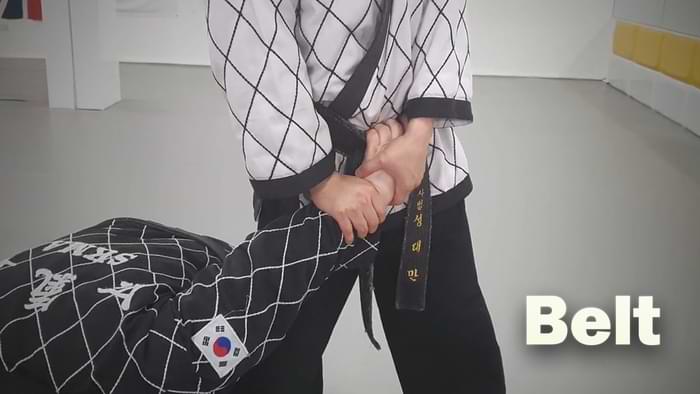
In this scenario, we will focus on defending against an opponent grabbing your belt. There are two different techniques depending on how your opponent grips your belt. Top of Hands Facing Up: If your opponent holds your belt with the top of their hands facing up, it indicates an attempt to showcase their strength. In response, you can employ the first technique. This technique involves leveraging your opponent's grip and using it to your advantage. Palms Facing Up: When your opponent holds your belt with their palms facing up, it presents another opportunity for defence. This grip suggests their intention to exert control over you. In this case, the second technique comes into play. This technique allows you to counter their grip and regain control of the situation.
Belt - 2 Techniques
In this scenario, we will focus on defending against an opponent grabbing your belt. There are two different techniques depending on how your opponent grips your belt. Top of Hands Facing Up: If your opponent holds your belt with the top of their hands facing up, it indicates an attempt to showcase their strength. In response, you can employ the first technique. This technique involves leveraging your opponent's grip and using it to your advantage. Palms Facing Up: When your opponent holds your belt with their palms facing up, it presents another opportunity for defence. This grip suggests their intention to exert control over you. In this case, the second technique comes into play. This technique allows you to counter their grip and regain control of the situation.
Hapkido Kicks
Single Kicks
Twisting and Pushing Kick
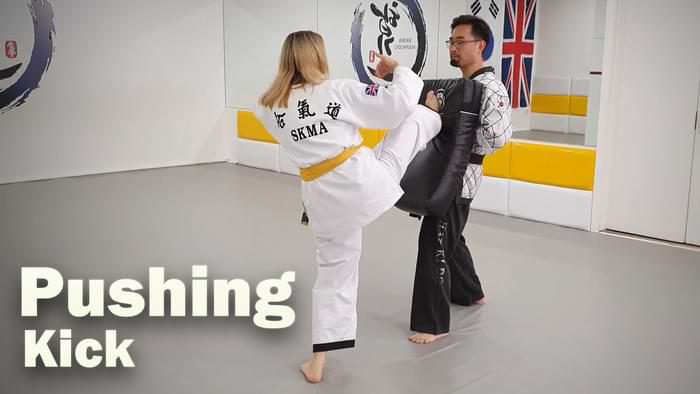
The signature Hapkido kicks are two distinct kicks that are particularly noteworthy: the Twisting Kick and the Pushing Kick. These kicks deviate from traditional kicks that typically require distance between you and your target. Instead, these kicks can be executed effectively in close proximity, making them highly valuable in real-life situations. The Twisting Kick involves a twisting motion of the body. This kick allows for powerful strikes while maintaining close-quarters engagement. Its unique twisting element adds momentum and impact to the kick. As the name suggests, the Pushing Kick is designed for close-quarters combat. It delivers a forceful push kick to the opponent, utilising the power generated from a short distance. This kick is particularly useful when engaged in close-range encounters. Both kicks exemplify Hapkido's signature techniques, providing practitioners with versatile options for close-quarters combat.
Sweeping Kick
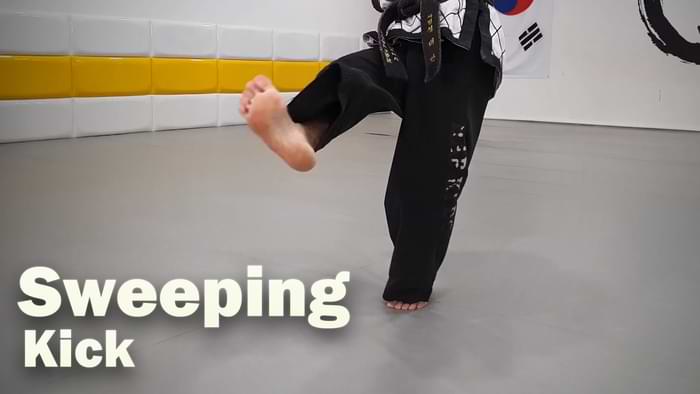
The Sweeping Kick is a close-range kick with distinct advantages, making it a valuable technique. Unlike other kicks that require significant flexibility, this kick is designed to disrupt your opponent's balance and can be employed effectively in various situations. Using the Sweeping Kick, you can break your opponent's balance, creating opportunities for further attacks or defensive manoeuvres. This kick is particularly useful in close-range encounters, allowing you to maintain proximity while delivering a powerful sweeping motion.
Sweeping Kick
The Sweeping Kick is a close-range kick with distinct advantages, making it a valuable technique. Unlike other kicks that require significant flexibility, this kick is designed to disrupt your opponent's balance and can be employed effectively in various situations. Using the Sweeping Kick, you can break your opponent's balance, creating opportunities for further attacks or defensive manoeuvres. This kick is particularly useful in close-range encounters, allowing you to maintain proximity while delivering a powerful sweeping motion.
Combination Kicks
Front and Back Kick
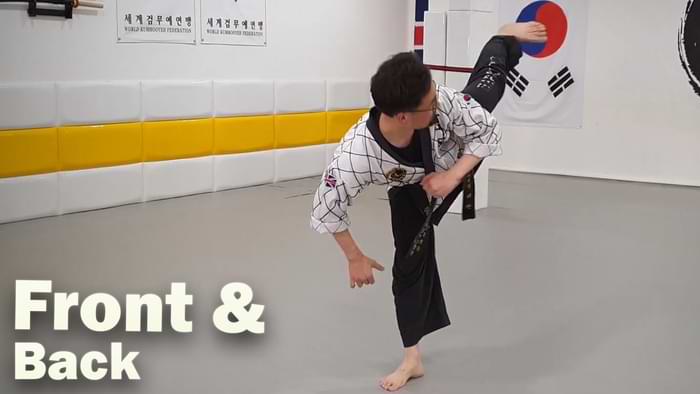
Hapkido incorporates a wide range of combination kicks, combining two, three, or even four kicks in a fluid sequence. One of the fundamental combinations involves a front kick and a back kick, designed to address scenarios where two opponents approach you from different directions. Imagine an opponent approaching from the front and another from the back. To execute this combination, you initiate with a front kick directed towards the opponent in front of you. Immediately after, you transition seamlessly into a back kick, similar to a sidekick, targeting the opponent behind you. However, it is crucial to maintain awareness during the back kick, ensuring you look where you are kicking to avoid any potential accidents. These combination kicks require coordination and awareness and are highly effective in real-life situations.
Front and Turning Kick
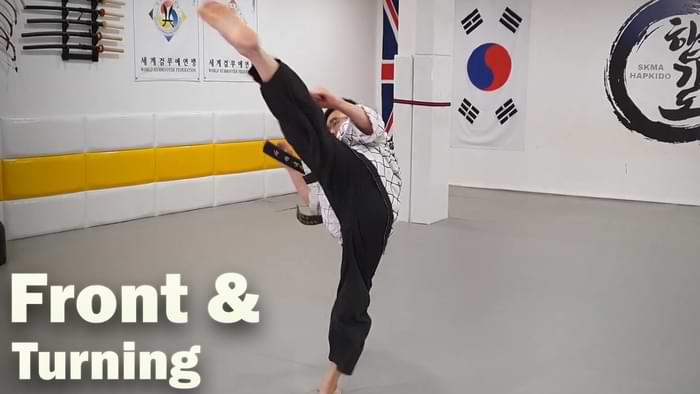
One of the most effective combination kicks in Hapkido is the Front and Turning Kick. This dynamic sequence involves executing a front kick followed by a turning kick while moving forward. Imagine engaging in a fight where you initiate with a front kick but miss your target. Rather than pausing or retreating, you seamlessly transition by stepping forward and launching a turning kick towards your opponent. It's important to acknowledge that relying solely on a single kick in real-life situations may only sometimes be effective, as opponents typically respond with quick reflexes. You maintain forward momentum by employing the Front and Turning Kick combination while delivering two consecutive kicks. This approach increases your chances of landing a successful strike and keeps your opponents on their toes.
Front and Turning Kick
One of the most effective combination kicks in Hapkido is the Front and Turning Kick. This dynamic sequence involves executing a front kick followed by a turning kick while moving forward. Imagine engaging in a fight where you initiate with a front kick but miss your target. Rather than pausing or retreating, you seamlessly transition by stepping forward and launching a turning kick towards your opponent. It's important to acknowledge that relying solely on a single kick in real-life situations may only sometimes be effective, as opponents typically respond with quick reflexes. You maintain forward momentum by employing the Front and Turning Kick combination while delivering two consecutive kicks. This approach increases your chances of landing a successful strike and keeps your opponents on their toes.
Twisting and Side Kick
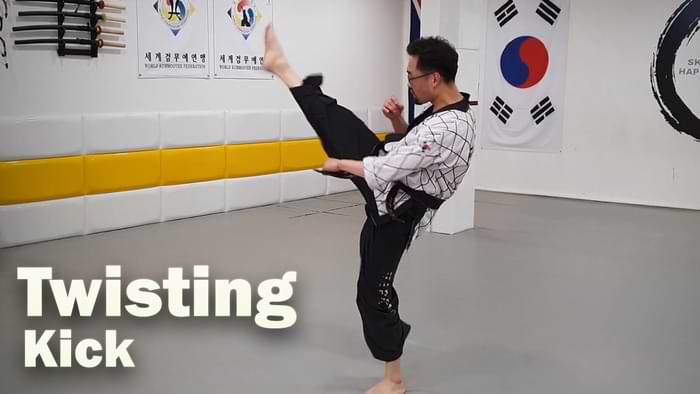
In this combination kick technique, we will focus on executing a Twisting Kick followed by a Side Kick. Picture yourself in a scenario where you are confronted by two opponents approaching from opposite sides. To counter this, you will initiate with a powerful Twisting Kick directed towards the front side of the opponent's body, targeting areas such as the belly or face. This kick harnesses rotational force to generate maximum impact. Following the Twisting Kick, you seamlessly transition into a Side Kick aimed at the opponent on your own side. This kick targets the body or neck region, utilising the force generated by your leg's lateral movement. Remember to practice these techniques diligently to enhance your speed, accuracy, and overall effectiveness in combat situations.
Hapkido Kicks Revision
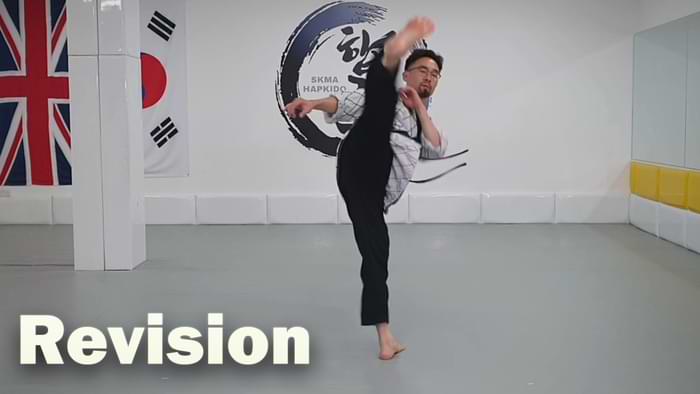
This video has compiled all the kicks necessary for your examination, providing you with a comprehensive review. It is important to note that these revision videos should be watched after completing the section details. Watching them only after completing the previous kicks lessons may cause you to overlook important finer details and close-ups essential for correctly understanding the techniques. Additionally, this video can be incorporated into your regular cardio exercise routine. Following along and practising the kicks can improve your cardiovascular fitness while honing your martial arts skills. Remember to approach these revision videos with a focused mindset and attention to detail, as they are designed to enhance your understanding and proficiency. Use this resource effectively to maximise the benefits of your training and examination preparation.
Breakfalls
Rolling Forward Breakfall
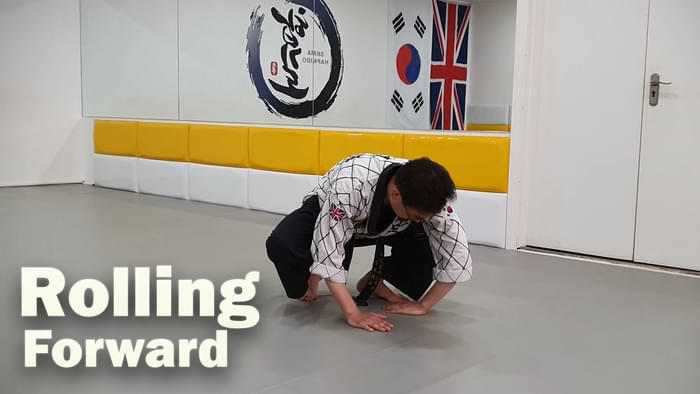
In this segment focused on yellow belt level training, we will be delving into the technique of rolling forward. Until now, you have already learned and practised rolling on one side. However, at this stage, it is crucial to advance your skills by mastering rolling on both sides. The key aspect of yellow belt training is the ability to execute a roll and swiftly stand up after performing the roll. Practising rolling on both sides is of utmost importance as it enables you to adapt fluidly in various scenarios. You should aim to develop a natural instinct for rolling, regardless of which side you are rolling onto.
Rolling Forward Breakfall
In this segment focused on yellow belt level training, we will be delving into the technique of rolling forward. Until now, you have already learned and practised rolling on one side. However, at this stage, it is crucial to advance your skills by mastering rolling on both sides. The key aspect of yellow belt training is the ability to execute a roll and swiftly stand up after performing the roll. Practising rolling on both sides is of utmost importance as it enables you to adapt fluidly in various scenarios. You should aim to develop a natural instinct for rolling, regardless of which side you are rolling onto.
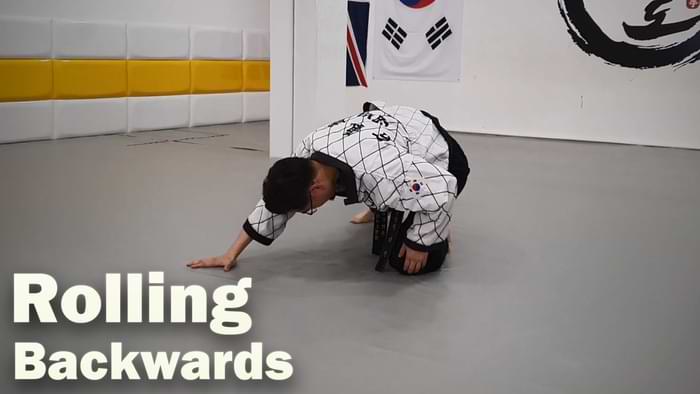
Rolling Backward Breakfall
In this video, Master Sung will provide detailed guidance on how to roll backwards safely. It is essential to pay close attention and carefully follow the instructions provided. By lying down and positioning both legs over one side, you will learn how to execute the technique securely. Remember, the key to mastering rolling backward lies in overcoming the discomfort of your weaker side and ensuring the safety of your neck. By attentively watching this instructional video and following the instructions, you will gain the necessary skills to confidently and safely roll backwards.
Exam Preparation
Yellow Belt Exam Preparation
This last video in the Yellow Belt course is a revision and preparation for the video examination you will submit. Combining everything we have learnt into a short video that Master Sung will review to ensure you have made the necessary progress to safely move to a Senior Yellow Belt course and continue improving your confidence through Hapkido-based self-defence. You've made it so far, and you only have a little way to go. We wish you all the best on your exam. You've got this!
Yellow Belt Exam Preparation
This last video in the Yellow Belt course is a revision and preparation for the video examination you will submit. Combining everything we have learnt into a short video that Master Sung will review to ensure you have made the necessary progress to safely move to a Senior Yellow Belt course and continue improving your confidence through Hapkido-based self-defence. You've made it so far, and you only have a little way to go. We wish you all the best on your exam. You've got this!